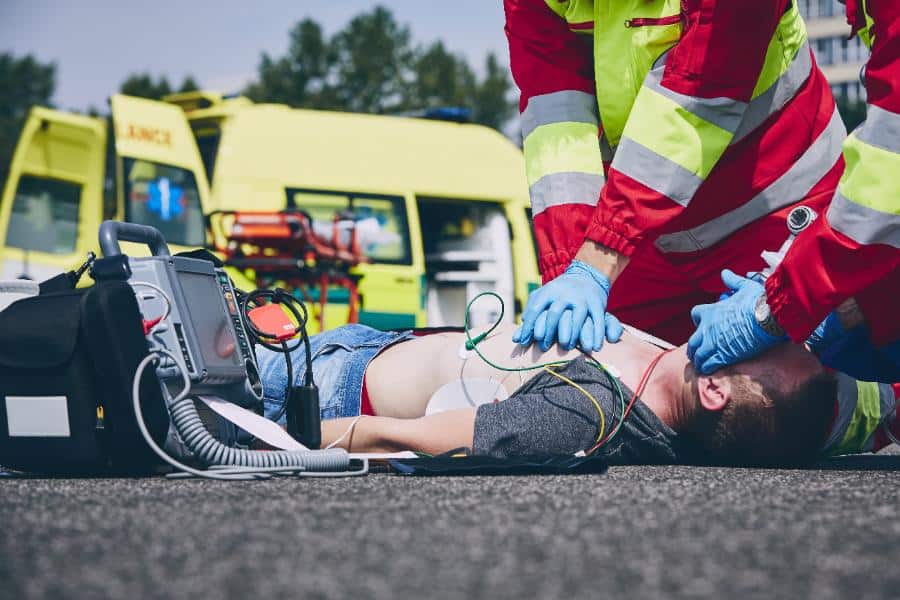

When we talk about Cardiopulmonary Resuscitation (CPR), the conversation almost exclusively revolves around the physical mechanics: the depth of chest compressions, the rhythm of the heart, and the flow of oxygen to the brain. We measure success in heartbeats restored and lives saved. However, there is a silent, invisible aftermath to every cardiac event that often goes unspoken. The impact of a resuscitation attempt ripples far beyond the physical body, crashing into the mental and emotional well-being of everyone involved.
If you need flexible training from home, our online cpr and first aid program lets you learn lifesaving skills at your own pace.
From the survivor grappling with the fragility of life to the bystander who stepped in to help, and even the family members who watched in horror, a cardiac arrest is a profound psychological trauma. Understanding the link between CPR and mental health is crucial. It allows us to prepare not just our hands for the rescue, but our minds for the recovery. It shifts the narrative from merely “surviving” to truly “living” after the event.
The Hidden Burden on the Lay Rescuer
We call them heroes—the strangers or loved ones who drop to their knees to perform CPR. But the label of “hero” can sometimes feel like a heavy coat that doesn’t quite fit. For the lay rescuer, the experience of performing CPR is visceral and often violent. The sensation of ribs cracking under the force of compressions, the sound of agonal breathing, and the sheer chaos of the scene can etch themselves into memory.
Complete your cpr and first aid certification online quickly and conveniently with our nationally recognized courses.
It is not uncommon for rescuers to experience a form of Post-Traumatic Stress Disorder (PTSD). They may be haunted by “what ifs.” Did I push hard enough? Did I start soon enough? Why didn’t they make it? Even when the outcome is positive, the adrenaline crash can leave a rescuer feeling depleted, anxious, or emotionally numb. Recognizing that these feelings are a normal reaction to an abnormal event is the first step toward healing. We must normalize the idea that saving a life can be as traumatic as it is noble.
The Survivor’s Journey: Anxiety and the “New Normal”
For the person who wakes up, the world has changed. Surviving a Sudden Cardiac Arrest (SCA) is a miracle, but miracles can be terrifying. Many survivors report a unique type of anxiety centered around the fear of recurrence. They live with a “sword of Damocles” hanging over them, hyper-aware of every flutter or skip in their heartbeat. This hyper-vigilance can be exhausting, leading to insomnia and panic attacks.
We proudly offer spanish cpr classes to ensure more members of the community can access lifesaving education.

Furthermore, survivors often grapple with cognitive changes—memory fog or difficulty concentrating—caused by the temporary lack of oxygen. This can lead to frustration and a loss of self-confidence. Depression is a frequent companion in the months following discharge, as the survivor mourns their “old self” while trying to navigate a new reality filled with medications, doctors, and limitations. Mental health support is not an optional add-on for these patients; it is a critical component of their cardiac rehabilitation.
The Family’s Trauma: The Co-Survivors
Family members are often the forgotten victims of cardiac arrest. They are the “co-survivors.” In many cases, a spouse or child is the one who finds their loved one collapsed and has to perform CPR while waiting for the ambulance. They witness the event in high definition, helpless to do anything but wait and pray.
After the event, while the patient is recovering, the family member often stays in “fight or flight” mode. They become the vigilant guardians, afraid to leave the survivor alone, afraid to sleep, and constantly scanning for danger. This chronic stress can lead to caregiver burnout, compassion fatigue, and significant emotional distress. Supporting the family’s mental health is essential because they are the foundation upon which the survivor’s recovery is built.
Breaking the Silence: The Role of Support Groups
One of the most powerful tools for mental recovery is connection. Isolation feeds trauma. Survivors and rescuers often feel that no one else can possibly understand what they have been through. This is where support groups play a pivotal role. Sitting in a room (or a virtual chat) with others who have walked the same fire can be transformative.
Hearing another survivor say, “I felt guilty for surviving too,” or a rescuer admit, “I still have nightmares about the sound,” validates the experience. It breaks the isolation. Organizations like the Sudden Cardiac Arrest Foundation offer peer support networks that help individuals process their emotions in a safe, non-judgmental space, turning a solitary struggle into a shared journey of healing.
Preparing the Mind: Mental Health in CPR Training
Finally, we need to rethink how we teach CPR. Traditional training focuses entirely on the “how-to” of the physical act. We need to start including the “what-to-expect” of the emotional aftermath. Instructors should briefly mention that feeling shaken, guilty, or anxious after performing CPR is normal and that resources are available.
By inoculating students with this knowledge beforehand, we prepare them to handle the psychological impact if they are ever called to act. We empower them to seek help sooner rather than suffering in silence. Integrating mental health awareness into CPR training creates a more holistic, compassionate approach to emergency response—one that cares for the rescuer as much as the rescued.