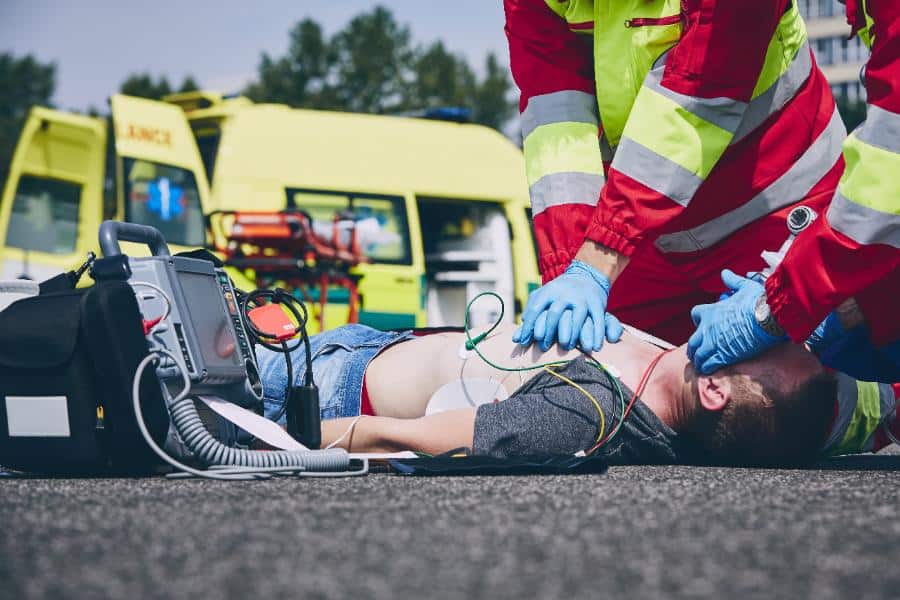
Schools are often viewed as sanctuaries—places of growth, discovery, and youthful energy. We imagine hallways filled with laughter, gymnasiums echoing with the squeak of sneakers, and classrooms buzzing with intellectual curiosity. However, within these vibrant environments, an invisible threat can lurk. Sudden Cardiac Arrest (SCA) is not a condition reserved solely for the elderly or the infirm; it strikes without prejudice, affecting thousands of young people and educators every year. In the terrifying quiet that follows a collapse, the difference between a tragedy and a miracle often rests in the hands of those standing nearby.
Choose from several first aid courses designed to prepare you for emergencies at work, school, or home.
Integrating Cardiopulmonary Resuscitation (CPR) training into school curricula is more than a safety measure; it is a moral imperative. By equipping teachers, staff, and students with the knowledge to respond to cardiac emergencies, we transform schools from passive environments into active safety nets. The ability to restart a heart is a superpower that can be taught in a single afternoon, yet its impact echoes for a lifetime.
Our hands-on aed course teaches you how to properly operate an automated external defibrillator during cardiac emergencies.
Creating a Generation of Life-Savers
The concept of “school safety” has evolved significantly over the years. We practice fire drills, lockdown procedures, and severe weather protocols with religious regularity. Yet, statistically, a student or staff member is far more likely to encounter a cardiac emergency than a fire. When schools prioritize CPR training, they are effectively deputizing the entire student body and faculty as first responders. This shift in culture does not just save lives within the school gates; it ripples outward, creating a community-wide resilience that benefits everyone.
We provide cpr certification for healthcare providers that meets professional and workplace compliance requirements.

When we teach CPR in schools, we are not just teaching a mechanical skill involving chest compressions and rescue breaths. We are teaching leadership, composure under pressure, and the profound responsibility of looking out for one another. It shifts a young person’s mindset from “someone else will help” to “I am the one who can help.”
The Reality of Sudden Cardiac Arrest in Youth
There is a dangerous misconception that heart issues are “adult problems.” This myth breeds complacency. The reality is that structural heart defects, electrical abnormalities, and even blunt trauma to the chest during sports (a phenomenon known as commotio cordis) can cause a young, seemingly healthy heart to stop beating instantly. These events are often silent and abrupt, occurring without the warning signs of chest pain that adults might experience.
Because these events are so unexpected, the element of shock can be paralyzing. Without training, bystanders often freeze or mistake the gasping sounds of cardiac arrest for a seizure or simple fainting. Comprehensive CPR training in schools educates students and staff on exactly what SCA looks like in young people, ensuring immediate recognition of the emergency and an instinctive response.
Bridging the Critical Gap Until EMS Arrives
In the timeline of a cardiac emergency, every second is a non-renewable resource. Once the heart stops, oxygen-rich blood ceases to flow to the brain. Brain death begins to occur in as little as four to six minutes. In many communities, even the most efficient Emergency Medical Services (EMS) teams cannot navigate traffic and geography to arrive within that narrow window.
Schools that train their population in CPR bridge this deadly gap. A teacher or student performing high-quality chest compressions acts as a manual heart, keeping vital organs alive until professional help arrives. This immediate “bystander” intervention can double or even triple the victim’s chance of survival. By the time the ambulance siren is heard in the distance, the work done by those in the classroom has already determined the trajectory of the outcome.
Empowering Students with Confidence and Responsibility
Adolescence is often a time of insecurity and a search for identity. Learning a life-saving skill like CPR provides a profound sense of agency and self-worth. When a student learns that their two hands have the power to sustain life, it significantly boosts their confidence. It demystifies the human body and medical emergencies, replacing fear with knowledge.
Furthermore, this training fosters a culture of empathy and civic duty. It reinforces the idea that we are responsible for our peers’ well-being. This sense of communal responsibility is a vital component of character education, helping to mold students who are not just academically proficient but also caring, capable citizens ready to contribute to society in the most meaningful way possible.
The Multiplier Effect: Safety Beyond the Classroom
The benefits of school-based CPR programs extend far beyond the campus boundaries. When students learn these skills, they take them home to their living rooms, community centers, and places of worship. Since approximately 70% of out-of-hospital cardiac arrests occur in the home, a student trained at school is most likely to use their skills to save a parent, sibling, or grandparent.
By making CPR a graduation requirement or a standard part of health education, schools serve as hubs of community health literacy. Over the course of a decade, a single school district can release thousands of trained rescuers into the general population. This “multiplier effect” drastically increases the overall safety of the town or city, creating a dense network of individuals ready to act whenever a heart fails.
Implementing Training: A Low-Cost, High-Reward Investment
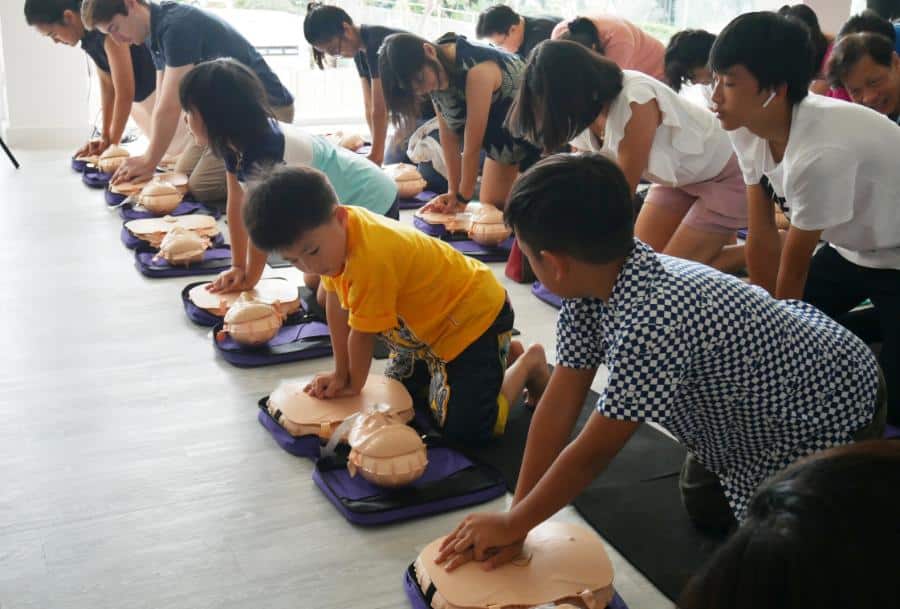
Some administrators hesitate to implement CPR programs due to perceived costs or logistical hurdles. However, modern training solutions have made this easier than ever. With the availability of “CPR in Schools” kits, simplified hands-only techniques, and partnerships with local fire departments or hospitals, the barrier to entry is low. The training can easily be incorporated into physical education or health classes without disrupting the academic calendar.
The cost of a few mannequins and a few hours of instruction is negligible compared to the value of a human life. When a school commits to CPR training, they are making a powerful statement: that it values the lives of its students and staff above all else. It is an investment that pays the ultimate dividend—the future itself.