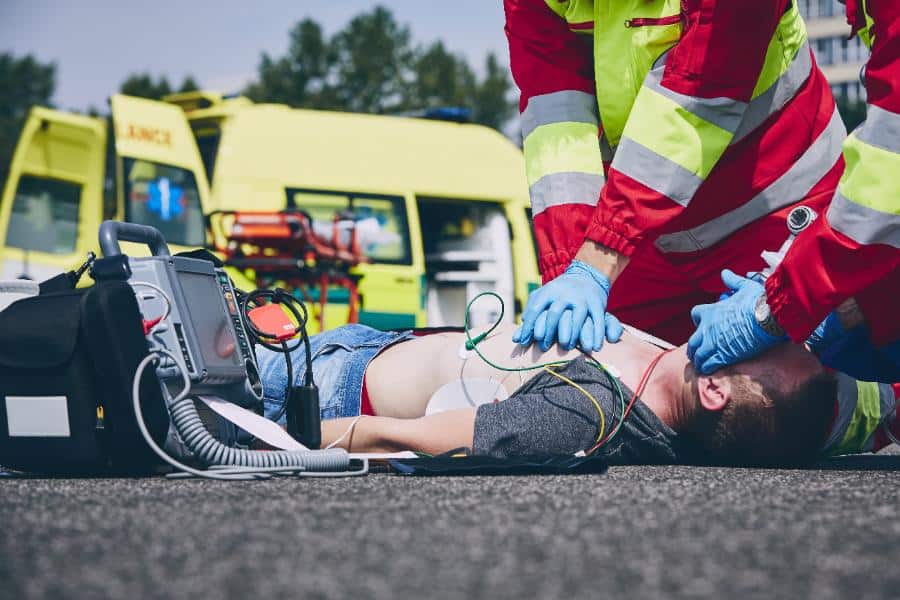
In the cinematic version of a medical emergency, a hero rushes in, performs a complex series of breaths and compressions, and the victim gasps back to life instantly. In reality, sudden cardiac arrest is far more chaotic, terrifying, and silent. It happens in grocery aisles, office breakrooms, and living rooms. For decades, the standard protocol for Cardiopulmonary Resuscitation (CPR) involved a synchronized dance of chest compressions and rescue breaths. While effective, this complexity often bred hesitation. Bystanders, paralyzed by the fear of forgetting the ratio or the reluctance to perform mouth-to-mouth on a stranger, often did nothing.
Take an online 1st aid course anytime to build confidence in handling common injuries and medical situations.
Enter Hands-Only CPR. This simplified, high-impact technique has revolutionized emergency response by stripping away the barriers to action. It is a method that champions the idea that you do not need to be a paramedic to save a life; you simply need two hands and the will to act. By focusing solely on chest compressions, this approach has empowered millions of ordinary people to become immediate lifesavers, drastically improving the odds of survival for adult victims of cardiac arrest.
After completing your training, you will receive your official cpr card as proof of certification.
Removing Barriers to Action: Why Simpler is Safer
The greatest enemy of a cardiac arrest victim is not the heart condition itself, but the clock. Every minute that passes without blood flow decreases the chance of survival by approximately 10 percent. The traditional method of CPR, with its requirement for mouth-to-mouth ventilation, created a psychological hurdle known as the “yuck factor.” In a post-pandemic world, the hesitation to place one’s mouth on a stranger—or even a relative—can cost precious seconds.
Searching for cpr first aid near me? We provide both online and local class options to fit your schedule.
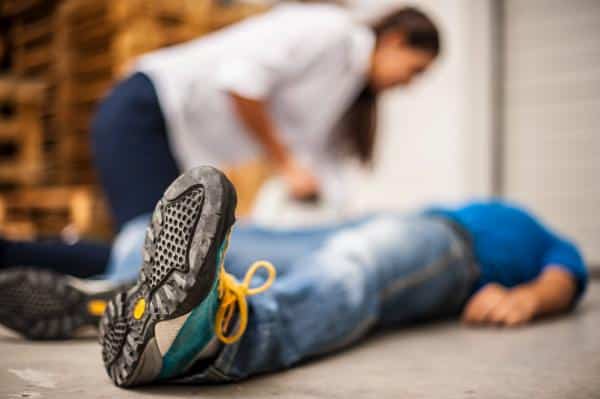
Hands-Only CPR eliminates this hesitation entirely. It removes the intimacy of rescue breaths, transforming the act from a medical procedure into a mechanical intervention. By simplifying the instructions to two steps—call 911 and push hard and fast—we reduce the cognitive load on the rescuer. Panic clouds the memory; simplicity cuts through the fog. When the protocol is easy to remember, bystanders are far more likely to jump in and start compressions immediately, and that speed is what saves lives.
Continuous Circulation: The Science of Perfusion
To understand why Hands-Only CPR is so effective, we must visualize the physiology of the body. When a person collapses from sudden cardiac arrest, their blood is usually still rich with oxygen from the breaths they took moments before. The immediate problem isn’t a lack of oxygen in the blood; it’s a lack of a pump to move that oxygen to the brain.
Chest compressions act as a manual heart. When you push down, you squeeze blood out to the vital organs. When you release, the heart refills. However, building up enough pressure to circulate blood—known as perfusion pressure—takes several consecutive compressions. In traditional CPR, every time you stop to give breaths, that pressure drops to zero, and you have to build it up again. Hands-Only CPR provides continuous, uninterrupted blood flow. It keeps the “pressure in the pipes,” ensuring a steady stream of oxygen reaches the brain, delaying cell death and preserving neurological function.
Empowering the Untrained Bystander
For years, people believed that if they weren’t “certified,” they weren’t qualified to help. They feared legal repercussions or, worse, hurting the victim. Hands-Only CPR democratizes life-saving. It sends a clear message: doing something is always better than doing nothing. The rib cage is resilient, and while there is a risk of injury, a cracked rib is a small price to pay for a beating heart.
This method is particularly effective for teen and adult victims who collapse suddenly. Because the technique requires no special equipment or medical background, it turns every person in a crowd into a potential first responder. It shifts the dynamic from “waiting for help” to “being the help.” This empowerment is crucial in the 8 to 12 minutes it typically takes for an ambulance to arrive.
The Rhythm of Rescue: How to Perform It
The beauty of Hands-Only CPR lies in its actionable simplicity. If you see a teen or adult collapse unexpectedly, the steps are straightforward. First, verify they are unresponsive and not breathing. Second, point to a specific person and tell them to call 911. Then, get to work.
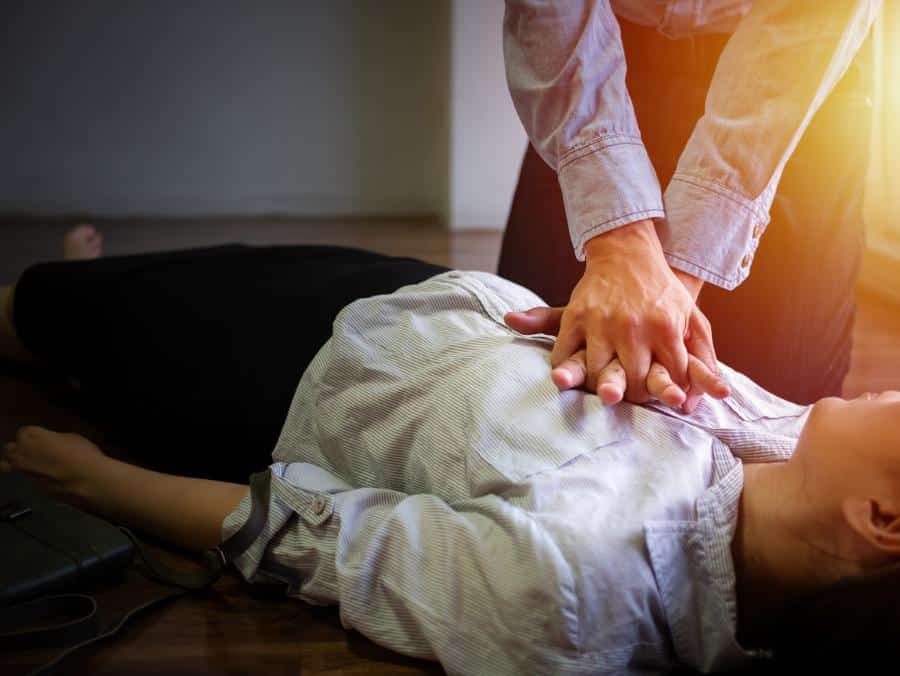
Place the heel of one hand in the center of the chest, right between the nipples. Place your other hand on top and interlock your fingers. Push down hard—at least two inches deep—and let the chest recoil completely after each push. The tempo is critical. You need to push at a rate of 100 to 120 beats per minute. To keep this rhythm, many rescuers hum a song with the right beat, such as “Stayin’ Alive” by the Bee Gees. This auditory anchor keeps you focused and ensures the compressions are rapid enough to be effective.
When to Use Traditional CPR
While Hands-Only CPR is a powerful tool, it is important to note that it is designed primarily for teens and adults who suffer a witnessed cardiac arrest. There are specific situations where conventional CPR with breaths is still preferred. These include emergencies involving infants and children, victims of drowning, drug overdoses, or people who have collapsed due to breathing problems. In these cases, the oxygen in the blood has likely been depleted, and rescue breaths are necessary to re-oxygenate the system.
However, for the vast majority of public cardiac emergencies involving adults, Hands-Only CPR is the gold standard for the layperson. It is a skill that requires no class to learn, yet holds the power to rewrite the ending of a tragedy.