Earning your Cardiopulmonary Resuscitation (CPR) certification is a moment of pride. It signifies that you have stepped up to become a guardian in your community, equipped with the knowledge and skills to intervene when a heart stops beating. However, holding that card in your wallet is not a “one-and-done” achievement. Like a muscle that atrophies without exercise, life-saving skills can fade from memory, and medical guidelines evolve as science advances. Maintaining your CPR certification is just as critical as earning it in the first place.
Take an online 1st aid course anytime to build confidence in handling common injuries and medical situations.
The reality of a cardiac emergency is chaotic and high-pressure. In those adrenaline-fueled moments, you cannot rely on vague recollections of a class you took five years ago. You need muscle memory. You need the confidence that comes from current, sharp skills. Keeping your certification active ensures that when the unthinkable happens, you won’t hesitate—you will act. This guide explores the vital steps to keeping your credentials valid and your readiness sharp.
After completing your training, you will receive your official cpr card as proof of certification.
Navigating the Renewal Cycle: Don’t Let It Expire
Most CPR certifications, whether from the American Red Cross, the American Heart Association, or other reputable organizations, are valid for two years. This expiration date isn’t arbitrary; it is based on research showing how quickly psychomotor skills degrade without practice. The first step in maintenance is simple vigilance. Mark your calendar, set a reminder on your phone, or stick a note on your refrigerator. Letting a certification lapse doesn’t just mean you lose a card; it often means you have to retake the entire, longer initial course rather than a shorter refresher class.
Searching for cpr first aid near me? We provide both online and local class options to fit your schedule.

Staying ahead of the curve allows you to choose a renewal class that fits your schedule, rather than scrambling at the last minute because your employer requires a valid card by Monday morning. Viewing renewal as a continuous cycle of learning rather than a periodic chore shifts your mindset from compliance to competence.
Understanding the Difference: Refresher vs. Full Course
One of the perks of maintaining your certification is the ability to take a “challenge” or “refresher” course. These are condensed versions of the full training designed specifically for individuals whose credentials are still valid or have only recently expired (usually within 30 days, though policies vary). These courses respect your prior knowledge, focusing on polishing your skills and updating you on any new protocols.
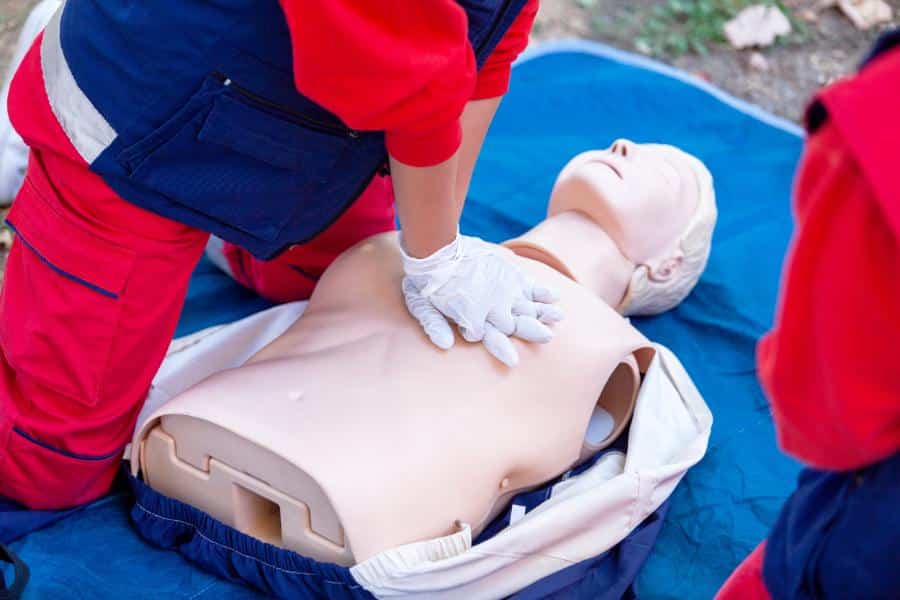
A refresher course typically moves faster. You’ll skip the basics of “what is a heart attack” and dive straight into hands-on practice: performing chest compressions, delivering rescue breaths, and operating an Automated External Defibrillator (AED). If you let your certification expire for too long, you lose this option and must sit through the full, comprehensive training again. Saving time and money is a strong incentive to stay current.
Embracing Blended Learning Options
We live in a digital age, and CPR training has adapted to fit our busy lives. “Blended learning” is a fantastic tool for maintaining certification without spending an entire Saturday in a classroom. This model allows you to complete the cognitive portion of the training—the videos, the quizzes, and the theory—online at your own pace. You can study from the comfort of your couch, pausing to digest complex information about airway management or pediatric care.
Once the online portion is complete, you attend a brief in-person “skills session.” Here, a certified instructor verifies your physical technique. They ensure your compressions are deep enough, your recoil is complete, and your hand placement is precise. This hybrid approach removes the friction of scheduling, making it easier than ever to stay certified without disrupting your work-life balance.
Staying Updated on Guideline Changes
Medical science is not static; it is a living, breathing field of study. Organizations like the International Liaison Committee on Resuscitation (ILCOR) constantly review data to determine what techniques save the most lives. Over the years, we have seen guidelines shift from a focus on rescue breaths to an emphasis on “High-Quality CPR” and chest compressions. Ratios change, depths are adjusted, and the sequence of steps is refined.
By maintaining your certification, you ensure that you aren’t using outdated software on modern hardware. You learn the latest best practices. For instance, knowing the current emphasis on the speed of compressions (100 to 120 beats per minute) can make a significant difference in blood flow to the brain. Renewal courses are the delivery mechanism for these critical scientific updates.
Mental Rehearsal and Informal Practice
Between official recertification classes, you can maintain your mental edge through visualization. It sounds simple, but top athletes and first responders use it for a reason. Periodically, play out a scenario in your mind. If your colleague collapsed right now, what would you do? Where is the nearest AED? How do you unlock the case? Walking through these steps mentally helps myelinate the neural pathways, making the actual response faster and smoother.
Additionally, many training centers offer “skills check” apps or online videos that allow you to refresh your memory in five minutes. Watching a quick tutorial on infant choking or AED pad placement can dust off the cobwebs effectively. Treating your skills as a part of your daily life, rather than a certificate in a drawer, keeps you in a state of readiness.
The Professional and Personal Value of Validity
Beyond the altruistic reasons, maintaining your CPR certification often carries professional weight. For teachers, lifeguards, healthcare workers, and childcare providers, a lapse can mean suspension from work or lost wages. But even for those in corporate jobs, being a designated first aid responder is a valuable differentiator.
Ultimately, maintaining your certification is a commitment to the people around you. It is a silent promise to your family, your coworkers, and strangers on the street that if the worst day of their life occurs in your presence, you will be ready. You will not be a helpless witness; you will be a trained, capable link in the chain of survival.