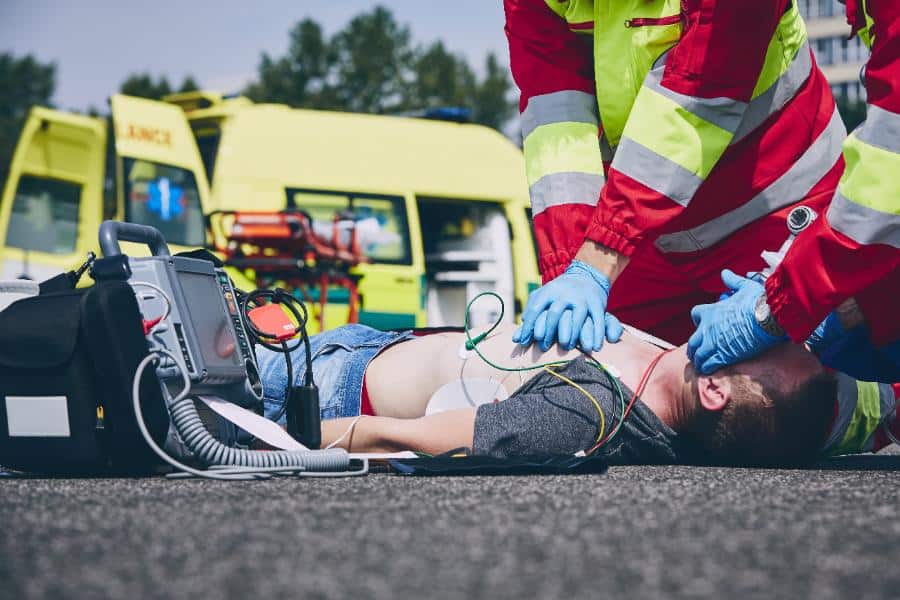
A community is more than just a collection of houses and streets; it is a web of human connections, a shared safety net where neighbors look out for one another. But what happens when that safety net is tested by a life-or-death emergency? In many neighborhoods, the spirit of helpfulness is strong, but the technical skills to save a life are missing. Sudden Cardiac Arrest (SCA) can strike anyone, anywhere—at the local grocery store, on the sidelines of a youth soccer game, or during a Sunday service. In those critical moments, the difference between tragedy and survival often rests on whether a bystander knows what to do.
If you need flexible training from home, our online cpr and first aid program lets you learn lifesaving skills at your own pace.
Encouraging CPR training in your community is not just about organizing a class; it is about shifting the culture. It is about transforming fear into confidence and hesitation into action. By weaving life-saving education into the fabric of daily life, we can create neighborhoods where “I don’t know how” is replaced by “I can help.” Here is how to spark that movement and build a community of lifesavers.
Making Training Accessible and Approachable
The biggest barrier to widespread CPR certification isn’t a lack of interest; it is often a lack of convenience. People are busy. Between work, school runs, and household chores, finding a spare Saturday for a four-hour certification course can feel impossible. To encourage participation, we must bring the training to the people, rather than waiting for them to come to the training.
Complete your cpr and first aid certification online quickly and conveniently with our nationally recognized courses.
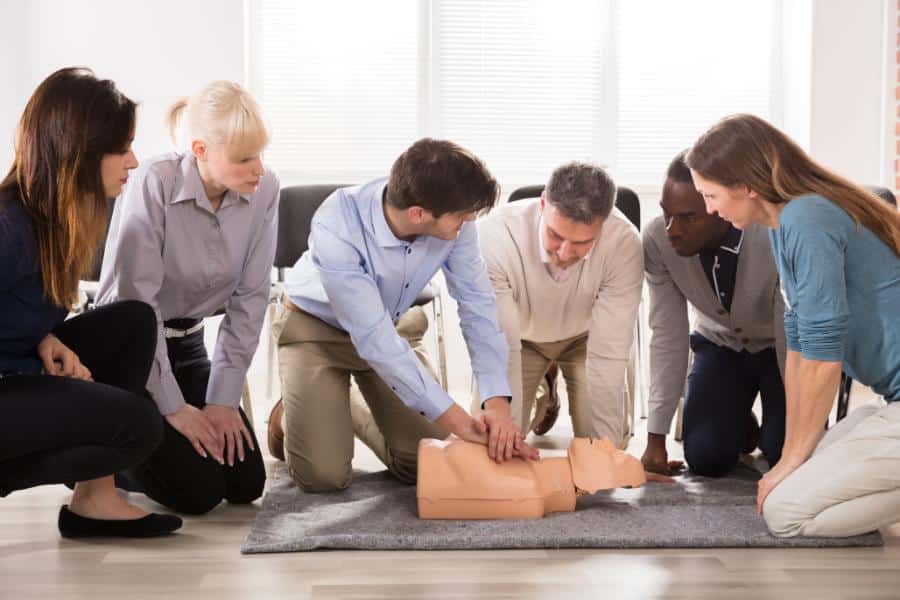
Imagine a “pop-up” CPR station at the Saturday farmers’ market, where shoppers can learn Hands-Only CPR in five minutes between buying kale and coffee. Picture a “Lunch and Learn” session at the local library or community center, where retirees can learn the basics over a sandwich. By breaking training down into bite-sized, low-pressure interactions, you demystify the process. You show people that they don’t need a medical degree to make a difference—they just need two hands and a little bit of knowledge.

Leveraging Local Hubs and Leaders
Every community has its beating hearts—the places where people naturally gather and trust the leadership. These are your most powerful allies. Faith-based organizations, for instance, are ideal venues. A pastor, rabbi, or imam encouraging their congregation to stay after the service for a safety workshop carries immense weight. It frames CPR not just as a skill, but as an act of stewardship and love for one’s neighbor.
Similarly, youth sports leagues are a goldmine for engagement. Parents spend hours on the sidelines cheering for their kids. Why not use the pre-season meeting to train coaches and parents in CPR and AED use? When a coach knows how to respond to a cardiac emergency, the entire team is safer. By integrating training into the spaces people already value, you make it a natural extension of their community involvement.
The Power of Storytelling
Statistics are important, but stories move mountains. To truly motivate your neighbors, you need to make the “why” personal. Invite a local cardiac arrest survivor to speak at a town hall or share their story in the neighborhood newsletter. Hearing a neighbor say, “I am here today because someone like you knew what to do,” is a powerful catalyst for action.
We proudly offer spanish cpr classes to ensure more members of the community can access lifesaving education.
Conversely, share the stories of the “saves” that didn’t happen—not to shame, but to highlight the need. When people realize that the ambulance might be ten minutes away, but they are right there now, the abstract concept of “emergency response” becomes a tangible responsibility. Use social media to highlight local heroes who have completed their training, creating a “fear of missing out” on being part of the solution.
Gamification and Friendly Competition
Human beings are naturally competitive. Harness this trait to drive engagement. Organize a “CPR Challenge” between different streets, businesses, or local fire districts. Who can get the highest percentage of their members trained? Create a visual tracker—like a fundraising thermometer—in a public square to show progress toward a goal of, say, 500 trained residents.
You can also host events like a “CPR Relay” at a block party, where teams race to perform high-quality compressions on a mannequin. By injecting fun and energy into the process, you strip away the intimidation factor. It becomes a bonding activity rather than a chore, fostering a sense of shared accomplishment.
Addressing the “Fear Factor” Head-On
Many people hesitate to learn CPR because they are afraid of doing it wrong or causing harm. Your advocacy must address these fears directly. Host “myth-busting” sessions where instructors explain Good Samaritan laws, which legally protect bystanders who act in good faith. Show them that modern “Hands-Only” CPR is simpler than ever, removing the barrier of mouth-to-mouth resuscitation that makes many uncomfortable.
Emphasize that the only wrong move is doing nothing. A victim of cardiac arrest is already clinically dead; you cannot make their condition worse. You can only offer a chance at life. When people understand that they are the bridge to the professional medical team, the weight of perfection lifts, replaced by the empowerment of action.
Partnering with Local Businesses for Incentives
Finally, sweeten the deal. Partner with local coffee shops, gyms, or movie theaters to offer small discounts to anyone who shows a valid CPR card. A “Free Coffee for Lifesavers” campaign is a low-cost way for businesses to show community spirit while rewarding residents for taking the time to learn. This creates a positive feedback loop where safety is valued, celebrated, and rewarded, embedding the importance of CPR deep into the local culture.