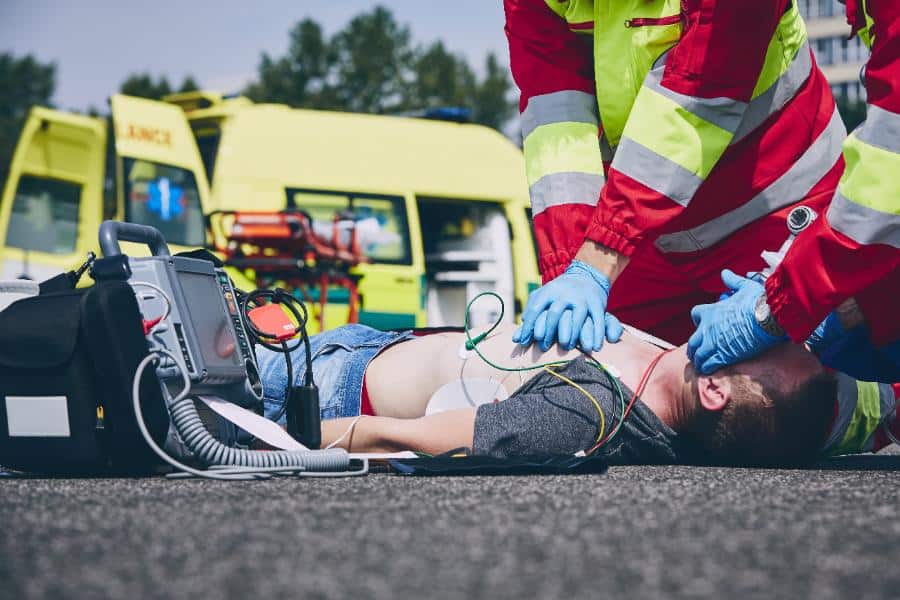

For decades, the image of CPR training has remained largely static: a fluorescent-lit room, a worn-out carpet, and a row of plastic torsos waiting to be compressed. It was a necessary, often tedious, box to check for employment or certification. But we are standing on the precipice of a revolution. The future of Cardiopulmonary Resuscitation (CPR) and first aid training is shedding its static skin and embracing a dynamic, high-tech, and deeply personalized evolution.
Complete your cpr and first aid certification online quickly and conveniently with our nationally recognized courses.
CPR And First Aid Training
As technology accelerates and our understanding of human learning deepens, the days of “one-size-fits-all” instruction are numbered. We are moving toward a world where training is immersive, data-driven, and accessible anywhere, at any time. This shift isn’t just about cool gadgets; it’s about closing the gap between the classroom and the crisis, ensuring that when the moment of truth arrives, the rescuer is not just certified, but truly ready.

Immersive Realism: Virtual and Augmented Reality
The biggest flaw in traditional training is the “emotional gap.” Pushing on a plastic dummy in a quiet room feels nothing like saving a life on a chaotic subway platform. The future solves this with Virtual Reality (VR) and Augmented Reality (AR). Imagine donning a headset and instantly being transported to a busy restaurant where a patron has collapsed. You hear the noise, see the panic in bystanders’ eyes, and have to make split-second decisions while virtual paramedics shout instructions.
This “stress inoculation” is a game-changer. By practicing in high-fidelity simulations, students learn to manage their adrenaline. They build muscle memory not just for the chest compressions, but for the psychological pressure of the event. AR takes this a step further by overlaying digital information onto the real world. Imagine wearing smart glasses that project the correct compression rate and depth directly onto a victim’s chest during a training scenario, guiding your hands with visual cues until the rhythm becomes second nature.
The Rise of “Smart” Mannequins and Haptic Feedback
The plastic dummies of the past are getting a brain transplant. Future mannequins are essentially sophisticated robots equipped with advanced sensors and haptic feedback systems. They won’t just sit there; they will react. They might groan if you press on a rib incorrectly or change skin color to indicate blood flow is returning.
These devices provide granular data that was previously impossible to capture. An instructor can see a dashboard showing exactly how many millimeters of depth a student is achieving, the precise angle of their hands, and the recoil percentage of the chest. This moves assessment from a subjective “looks good” to an objective, data-backed “98% proficiency,” ensuring that every certified student is physically capable of performing high-quality CPR.
Micro-Learning and “Just-in-Time” Training
The old model of “learn once every two years” is fading. Science tells us that CPR skills degrade rapidly—often within three to six months. The future of training is continuous and bite-sized. Instead of a four-hour marathon session, imagine receiving a 5-minute refresher module on your phone every month. A quick video on infant choking while you wait for coffee, or a gamified quiz on stroke symptoms during your commute.
This concept extends to “just-in-time” training. In the near future, if you witness an emergency, your smartphone or smartwatch won’t just call 911; it will become a coach. It will project a video or voice guide, walking you through the steps in real-time. “Check breathing. Place hands here. Push to this beat.” This technology turns every bystander into a guided rescuer, bridging the knowledge gap instantly.
AI-Powered Personalization
Artificial Intelligence (AI) will become the ultimate teaching assistant. AI algorithms will analyze a student’s performance and tailor the curriculum to their weak points. If a student struggles with rescue breaths but excels at compressions, the system will automatically adjust the scenario to offer more practice on ventilation.
Furthermore, AI can answer questions in real-time, acting as a 24/7 tutor. It can analyze voice commands during simulations to ensure the rescuer is delegating tasks correctly (“You, call 911! You, get the AED!”). This personalized approach ensures that training is efficient, focusing time exactly where it is needed most.
Democratizing Access through Remote Learning
Geography should not be a barrier to saving a life. The future of training is hybrid and remote. “Blended learning” is already here, but it will become seamless. Students will complete cognitive theory online and then receive a “smart mannequin” kit in the mail. They will practice at home, connected via webcam to an instructor who monitors their technique through the mannequin’s sensors.
This model opens the door for rural communities, busy parents, and people with limited mobility to get certified without traveling to a training center. By removing logistical friction, we can drastically increase the number of trained bystanders in the population, weaving a tighter safety net for everyone.
A Culture of Readiness
Ultimately, the future of CPR training is about culture. It is about shifting from “compliance” to “competence.” It is about moving away from the fear of doing it wrong and embracing the tools that make doing it right easier than ever. As technology evolves, the power to save a life will literally be in the palm of our hands, making the world a safer place one heartbeat at a time.